
- What Are ChatGPT Ads?
- How ChatGPT Ads Work?
- How to Set Up a ChatGPT Ads Campaign
- What ChatGPT Ads Could Mean for Businesses
- How ChatGPT Ads Could Change Digital Marketing
- ChatGPT Ads and SEO: What Businesses Should Know
- Industries That Could Benefit From ChatGPT Advertising
- Challenges and Concerns Around ChatGPT Ads
- How Businesses Can Prepare for ChatGPT Ads
- The Future of Advertising in AI-Powered Search
- FAQs About ChatGPT Ads
- Conclusion
ChatGPT Ads are now a commercial advertising platform that allows businesses to reach users during relevant conversations. OpenAI reported that ChatGPT Ads reached a $1 billion annualized revenue run rate within 200 days of launch, with tens of thousands of advertisers using the platform. OpenAI: A milestone in expanding access to AI. ChatGPT Ads are now available in 60+ countries, including India.
Unlike traditional keyword-based advertising, ChatGPT Ads use multiple relevance signals, including the context and intent of the current conversation, the ad’s landing page, title, and copy, and advertiser-provided context hints.
Ads are clearly labeled and displayed separately from ChatGPT’s answers, and advertisers cannot influence, rank, or alter ChatGPT’s responses.
ChatGPT Ads give businesses another way to reach potential customers while they research products, compare options, or look for solutions. However, they do not replace traditional search engines, websites, social media, or SEO. Businesses still need accurate product information, useful content, clear landing pages, and a strong online presence, including visibility in AI search through GEO services, to support customers across different discovery channels.
What Are ChatGPT Ads?
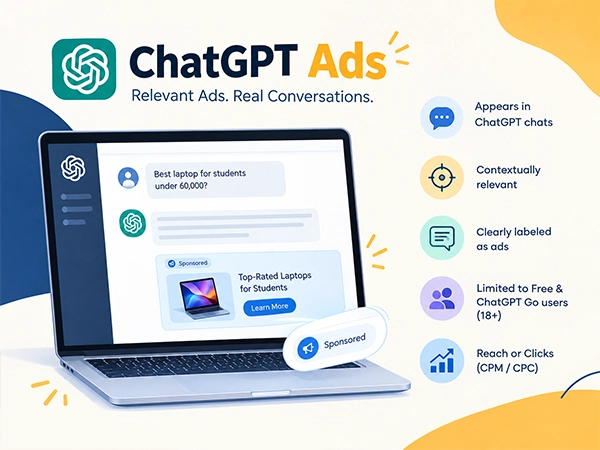
ChatGPT Ads refer to paid advertisements that allow businesses to reach users while they are researching products, comparing options, or making purchasing decisions. Unlike traditional search ads, which typically appear alongside search results, ChatGPT Ads are displayed within the ChatGPT experience and are designed to be relevant to the ongoing conversation. Currently, ads can be seen right below the responses from ChatGPT and are labeled as ads to differentiate them from the answers produced by the AI.
It’s important that users can clearly tell ads apart from ChatGPT’s own answers.
There is also an important point for businesses to keep in mind: ChatGPT ads are not shown to everyone. At the moment, ads are limited to users on the Free and ChatGPT Go plans who are 18 or older. Users on Plus, Pro, Team, Business, and Enterprise plans do not see ads. So, businesses should consider who they are actually trying to reach before treating ChatGPT Ads as a broad advertising channel.
OpenAI emphasizes the fact that ads are independent of the system that produces ChatGPT responses. In addition, this also means that an advertising company that advertises the ad cannot affect the rankings or change such information about ChatGPT responses.
This opens up a new way of digital visibility for businesses, different from traditional search advertising:
- Conversational setting: Ad messages can reach potential customers while they are talking about a specific need or looking for a product.
- Contextual relevance: For the sake of creating an ad, the advertising system can take into account the nature of the conversation and the purpose of the ongoing discourse.
- Separation of the ads: Paid positions are clearly separated from ChatGPT’s natural responses.
- Different campaign goals: Advertisers must choose between Reach (CPM) and Clicks (CPC) objectives as the primary buying models, while conversion-focused bidding remains in a gradual rollout phase.
ChatGPT advertising is different from keyword-based advertising. The major focus is on understanding users’ aims instead of sticking to the entered queries.
How ChatGPT Ads Work?
Already an active advertising product, advertisements on ChatGPT are still evolving. OpenAI’s advertising platform considers the context and intent of the ongoing conversation when selecting relevant ads. It also evaluates information from the ad and its landing page. Advertiser-provided context hints and the user’s overall ChatGPT experience can provide additional signals for ad relevance.
The method being used is different from traditional keyword advertising. Advertisers can enter context hints that explain their products, services, target use cases, and customer needs. While such hints allow the system to determine when the ad is likely to be relevant, they are not actual keywords and do not provide guarantees for returning the ad for a specific conversation.
As an example, a running shoes vendor may specify in-context hints that its products are:
Cushioned everyday running shoes for beginner runners preparing for their first 5K.
It is based on such input that the system determines the situations where the product can be of use.
ChatGPT Ads can also help with different marketing goals. Advertisers can select Views for impressions, Clicks for web traffic, or Conversions for conversion rates.
The ad experience may also become more engaging. OpenAI is trialing Sponsored Agents that give users the ability to start a conversation with an AI counterpart of a brand after clicking the ad. This format is currently limited to select advertisers.
How to Set Up a ChatGPT Ads Campaign
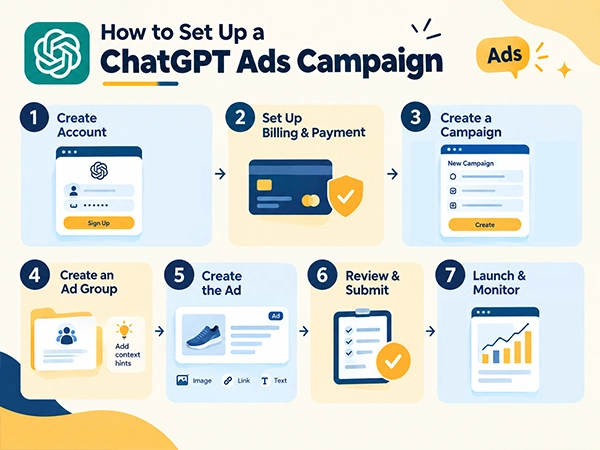
Businesses can create and manage ChatGPT advertising campaigns through OpenAI Ads Manager Beta. Before creating a campaign, advertisers need an Ads Manager account, business verification, billing information, and a payment method.
Step 1: Create an Ads Manager Account
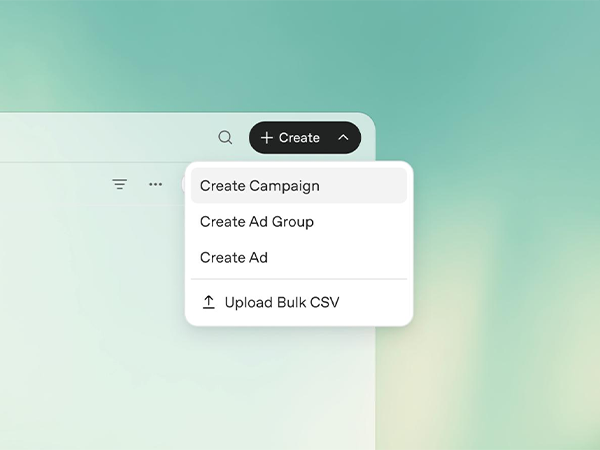
The first step is to visit OpenAI Ads Manager and log in using an OpenAI account.
In this phase of setting up the account, businesses would be required to provide the following information including:
- Business name
- Website
- Logo
- Industry
- Country or region
- Currency
- Time zone
It is also important to remember here that advertisers may be asked to go through the verification of business or identity. OpenAI reinforces the notion that campaigns will only start to function once the steps associated with account setup, verification, and billing are completed.
Step 2: Set Up Billing and Payment

After account setup and verification, open the billing settings in Ads Manager. Create a billing profile and add a payment method.
OpenAI currently requires billing and payment to be fully configured before campaigns can deliver.
Step 3: Create a Campaign
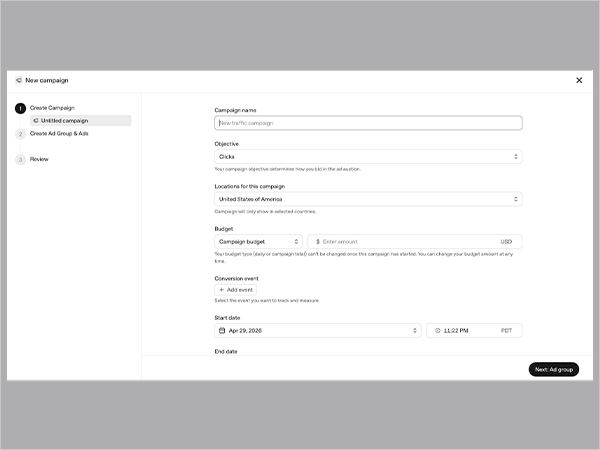
Once the advertiser account is set up, visit Ads Manager and select Create → Create campaign.
A campaign specifies the main goal of the ad, budget, time frame, and target audience. Advertisers can take advantage of the step-by-step campaign set-up process or use bulk upload for mass campaign creation.
The common campaign options include:
- Campaign name
- Objective
- Budget
- Starting and finishing dates
- Target country
- Platforms where ads will be placed, if available.
Step 4: Create an Ad Group
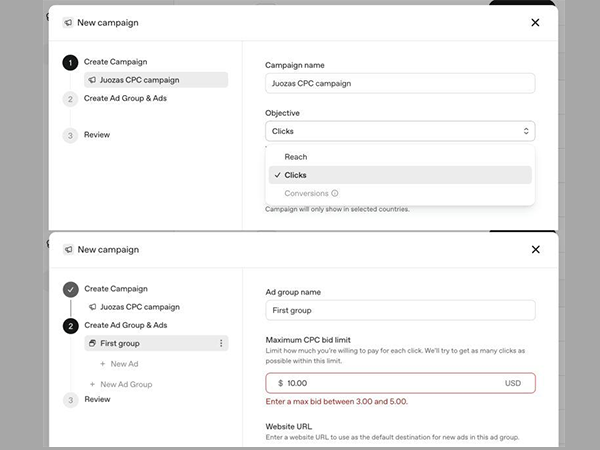
After creating the campaign, add an ad group. Ad groups allow advertisers to organize ads around a particular theme, audience need, or intent.
This is also where advertisers can provide context hints describing the types of conversations in which their ads may be relevant.
For example, a running-shoe company could use context hints describing beginner runners looking for cushioned shoes for everyday training.
Step 5: Create the Ad
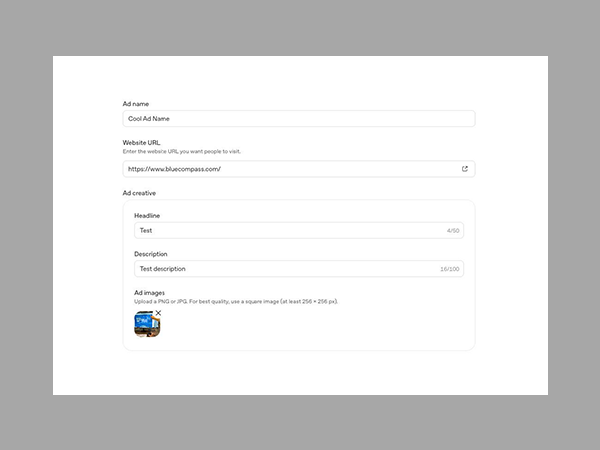
Then, choose the ad group and set up the relevant ad.
An advertisement can consist of:
- Brand name
- Logotype
- Advertisement title
- Advertising content
- Landing page link
- Picture
According to OpenAI’s most recent guidelines, advertising titles should not contain more than 50 characters, and the advertising content should not be over 100 characters. Images should be available on the web, and they should be square-shaped with maximum dimensions of 1200X1200.
Step 6: Review and Submit the Campaign
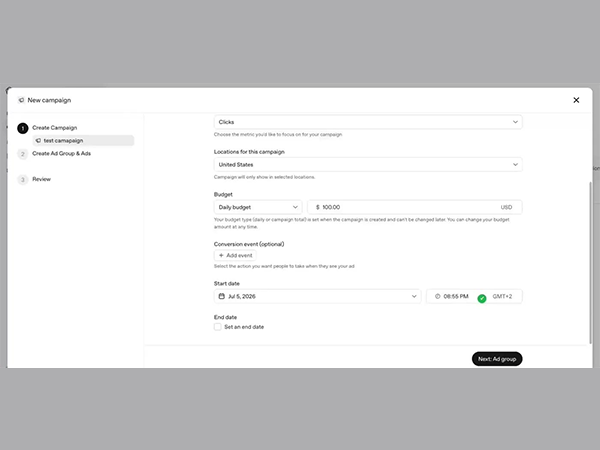
Prior to starting any campaign, ensure the campaign, ad group, and ad contain all necessary details. For guided campaigns, make sure the campaign is set to Active before submitting. Ads and campaigns may also need approval from OpenAI before they are able to run.
Step 7: Set Up Event Tracking
To see conversions in Ads Manager, set up event tracking before you launch. Without it, you will only see impressions, clicks, and CTR.
- Open the Conversions tab in Ads Manager and create a Pixel ID and a Conversions API key.
- Install the OpenAI Pixel on your website to track actions like purchases, add to cart, and signups.
- Add the Conversions API for more reliable tracking, since browsers can block the Pixel.
- If you use both, send the same event ID so one conversion is not counted twice.
- Choose the event that counts as a conversion (like a purchase or lead) and attach it to your campaign.
Step 8: Launch and Monitor Performance
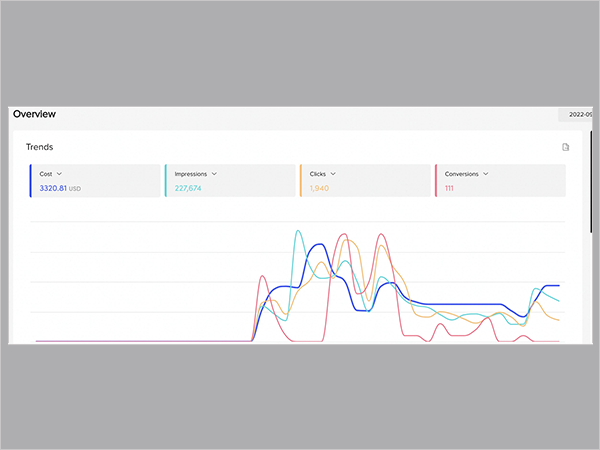
After approval, monitor the campaign in Ads Manager. Advertisers can track metrics such as impressions, clicks, CTR, spend, and conversions when conversion measurement is configured. OpenAI says impressions, clicks, and CTR can update relatively quickly, while spend reporting may be delayed.
What ChatGPT Ads Could Mean for Businesses
For companies, the main opportunity is to reach customers while they are actively seeking information, comparing alternatives, or making purchasing decisions. According to OpenAI, these conversational interactions can provide opportunities for businesses to reach users with relevant advertising.
This adds a new layer to how customers discover businesses. Companies will not only have to compete for visibility in search engines, social media, marketplaces, and industry sites but also to gain another terrain where their potential customers can get information.
For instance, a customer can compare:
- Accounting services for a small business
- Laptops within a certain price category
- Hotels for a particular type of journey
- Marketing agencies for definite services
- Software with required integrations
- Home services providers.
The main thing is that a customer can set multiple criteria in one interaction.
For businesses, there are opportunities on various fronts:
- E-commerce: Advertise merchandise as customers are in the process of comparing goods, prices, and alternatives.
- SaaS and technology: Reach customers looking for software based on their business needs.
- Professional services: Engage with those in search of solutions to specific business or personal challenges.
- Local businesses: Potentially reach potential clients who look for services in their region.
- Education: Communicate with customers comparing various courses, learning programs, or certifications.
However, businesses must consider competition and costs. Because it’s auction-based, cost will depend on where advertisers place their bids, depending on their campaign objectives. As more businesses enter the advertising space, it will be important to focus on cost, relevance, traffic quality, and conversions rather than assuming AI ads will automatically be cheaper than search advertising.
How ChatGPT Ads Could Change Digital Marketing
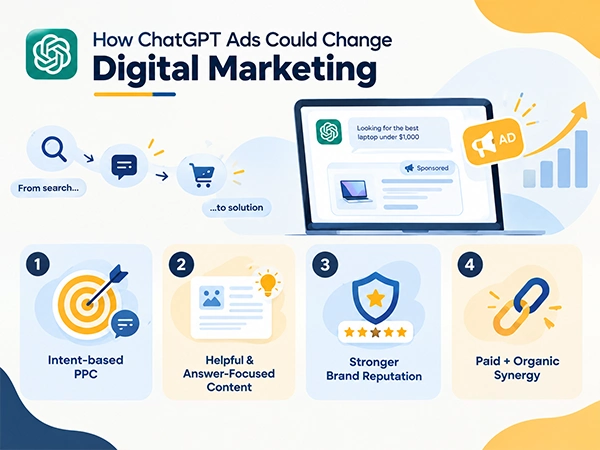
Ads placed on ChatGPT can revolutionize the digital marketing industry by changing the way businesses contact customers at the phase of discovery and the decision-making process. The conventional style of digital marketing starts with a keyword search and goes through the process of visiting numerous websites. Conversational AI enables this journey to be shorter, allowing the customer to describe what they need, compare the possibilities, and find solutions in a single interaction.
As a result, marketers have to pay more attention to the intent of the customer and their conversational behavior instead of focusing on keywords alone.
Digital marketing is likely to evolve in several ways as AI-powered search and advertising become more prominent. Marketers may need to adapt by:
- One possible development would be moving to more intent-based PPC techniques, where campaigns may concentrate on what customers want to achieve instead of focusing on keywords typed in a search bar.
- Another change in digital marketing would mean that content that provides answers and helps users make decisions will need to be more valuable.
- So, more focus on brand reputation will be needed. Online reviews, references from well-known sources, and correct information will become more important than ever.
- In addition, marketers will have to understand the interconnection and effectiveness of paid and organic advertising.
Thus, marketers should change their focus from just the target keywords towards understanding the conversations behind the searches.
ChatGPT Ads and SEO: What Businesses Should Know
Some assume ChatGPT Ads make SEO irrelevant. That’s not true; paid ads and organic search aren’t opposites. With advertising, businesses get visibility quickly, while the SEO process takes place over time.
Rather than making SEO irrelevant, using AI tools should be a part of a comprehensive digital marketing strategy, alongside effective SEO services that help businesses build long-term organic visibility.
Businesses should ensure they create content that is useful for their customers, such as:
- Product information and comparison
- FAQs
- How-to guides
- Prices
- Installation guides
- Product/service descriptions
An instance of this would be a software company developing an article that provides useful answers to queries, rather than writing about a highly searched keyword, such as:
- Who is this software suitable for?
- What features/software solutions does it provide?
- What is the price of this software?
- What integrations does this software have?
- How does it measure up to its competitors?
- What problems may a client have while implementing this software?
This type of content can provide a variety of significant results. For example, it can improve conventional SEO, assist customers in making informed decisions, and help both search engines and AI tools understand the business.
Moreover, the data provided should be correct and consistent on the website, corporate profiles, online directories, review sites, and reputable industry publications.
The intention is not to “optimize for ChatGPT.” It is essential to create a credible and informative presence online so that customers can find out about and trust the business no matter what tool they are using.
Industries That Could Benefit From ChatGPT Advertising
ChatGPT Ads promotions could aid industries that require research, comparisons, or queries from consumers before making purchases, and possibly allow companies to target consumers at the time they are searching for options.
Software and technology companies can promote software that is suitable for a user’s requests using ChatGPT Ads; for instance, the company can focus on specific software like accounting applications, project management software, or cybersecurity software.
Likewise, e-commerce and retail businesses can benefit from providing users with ads about relevant products as they are seeking recommendations or suggestions regarding the goods.
In addition, travel and hospitality companies can implement ChatGPT Ads to promote hotels, travel packages, flights, and activities at the time of travel planning. Likewise, educational organizations and online training providers can use ChatGPT Ads to promote courses, degrees, and training programs.
The use of artificial intelligence in marketing by financial service providers in order to introduce banking goods, insurance policies, investment services, or budgeting apps is acceptable as long as the parties comply with transparency requirements and financial regulations.
Fitness and wellness brands may have opportunities to advertise products or services, but businesses in health-related categories need to pay close attention to OpenAI’s advertising restrictions. Ads are not shown alongside sensitive topics such as health, mental health, or politics, and healthcare-related advertising is subject to additional restrictions. So, while health and wellness may seem like natural fits for conversational advertising, businesses in these areas should check whether their specific products, services, and messaging are eligible before planning a campaign.
The most promising spheres of influence will be represented by those sectors where clients need intricate explanations before making decisions. Informative, noticeable, and helpful ads will assist them in acquiring information without ruining their overall experience with ChatGPT technology.
Challenges and Concerns Around ChatGPT Ads
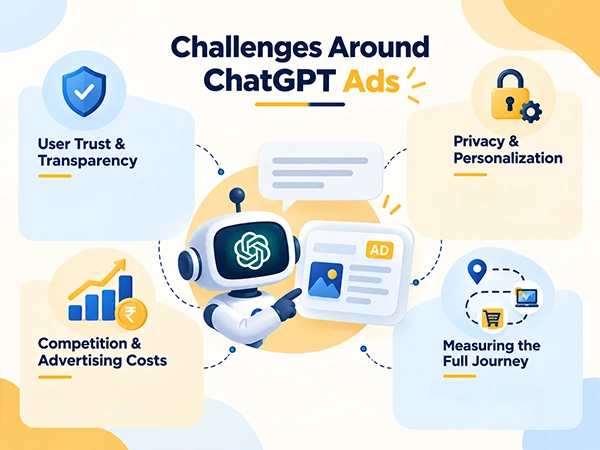
These challenges have a lot of obstacles.
User Trust and Transparency
It is essential for users to differentiate between promotional content and AI-generated content. According to OpenAI, ChatGPT ads are clearly labeled as sponsored and visually separated from ChatGPT’s responses. Advertisers cannot influence, rank, or alter the answers generated by ChatGPT. It is essential to keep this separation in mind as more ads are utilized in chat environments.
Privacy and Personalization
Customization is complicated by the requirements of relevance and proper confidentiality. OpenAI’s own system may use conversation history for relevance, but advertisers themselves never see it, and other general signals if this option is selected.
Organizations have to bear in mind this limitation while dealing with AI-based advertising.
Competition and Advertising Costs
Competition grows as the number of companies active on the platform increases. OpenAI’s Ads Manager allows for auction-based advertising and new buying techniques; therefore, companies will have to keep cost-efficiency and effectiveness in mind rather than assuming that ads based on AI are going to be cheaper than traditional search ads.
Measuring the Full Customer Journey
A customer can come across an ad, go on to search for additional information from ChatGPT, access a business’s website, and later make a purchase through an alternative channel. This increases the complexity of attribution work.
Marketers will need to go past standard last-click metrics and analyze how conversational interactions help create awareness, interest, and lead to action.
How Businesses Can Prepare for ChatGPT Ads
Companies need not fully reinvent their marketing strategies due to ChatGPT; instead, they ought to work on the building blocks that create many avenues of discovery.
1. Enhance SEO efforts and website.
Make sure that websites are technically proficient, landing pages are valuable, and information that answers customer questions is readily available.
2. Produce authoritative content.
Create genuinely helpful guides, comparison charts, FAQs, and provide product and industry information.
3. Enhance online reputation.
Ensure business accuracy and create credible reviews, mentions, and third-party references.
4. Understand conversational search behavior.
Do not only think about keywords; come up with answers to questions taken into account by clients in their decision-making processes.
5. Monitor AI-driven traffic.
Keep track of referral traffic and changes in the way clients find out about the brand. AI-driven discovery requires businesses to look beyond search rankings.
6. Proceed with caution when testing paid campaigns.
For companies that are allowed to advertise, OpenAI Ads Manager provides opportunities for campaigns, audiences, measurement, and optimization. At the moment, India is among the countries where self-service Ads Manager is available. A professional PPC services team can help plan the budget, test campaigns, and track results.
7. Implement intent-driven messaging.
Create different messages for customers researching, comparing, and preparing to purchase rather than relying on one generic advertisement.
The Future of Advertising in AI-Powered Search
The significant development is not just that ChatGPT has introduced ads, but rather that advertising is now being integrated as part of a more comprehensive transformation in terms of how information is found.
OpenAI has started to progress beyond merely the incorporation of ads, as it has already trialed Sponsored Agents and has integrated advertising systems into applications like Shopify and HubSpot. This suggests a world where searching, recommendations, ads, and customer conversations can be incorporated into a single journey.
This doesn’t imply that Google Ads or any form of conventional SEO will become obsolete, as search engines continue to be a vital part of obtaining information and online discoveries, in addition to other websites, social media platforms, and marketplaces.
Outside of this, businesses now have to consider a more comprehensive system of discovery across multiple channels. A potential customer may find out about a brand through Go
Google, verify it using ChatGPT, view a post on a social network, check out reviews from other customers, and finally buy the product via the company’s website.
FAQs About ChatGPT Ads
Does ChatGPT have ads?
ChatGPT may include advertising in selected experiences or markets, depending on OpenAI’s current rollout. Ads should be clearly identified, allowing users to distinguish sponsored recommendations from ordinary AI-generated responses easily.
How would ChatGPT ads work?
ChatGPT ads could appear as clearly labeled sponsored suggestions related to a user’s question. Advertisers may target relevant interests or needs, while OpenAI determines placement, format, eligibility, and platform rules.
Are ChatGPT ads replacing Google Ads?
No, ChatGPT ads are unlikely to replace Google Ads. They offer a different channel for reaching customers during AI conversations, while Google remains important for search, shopping, display, and video.
Will ChatGPT ads affect SEO?
ChatGPT ads will not make SEO unnecessary. Strong websites, helpful content, accurate information, and trusted mentions can still improve search visibility and help AI platforms better understand a business clearly.
How can businesses prepare for ChatGPT advertising?
Businesses should improve website content, answer customer questions, maintain accurate business information, strengthen SEO, monitor advertising updates, and prepare clear landing pages that match users’ needs and search intent closely.
What industries could benefit most from ChatGPT ads?
Software, e-commerce, travel, education, finance, healthcare, real estate, and professional services could benefit most because their customers frequently research options, compare providers, and ask detailed questions before purchasing products online.
Conclusion
Through the ChatGPT marketing mechanism, companies can utilize AI to interact with people during their experience of searching, evaluating, and assessing whether to buy a product or service. In this manner, the growth of conversational search resembles a closer relationship between advertising and the experience of finding products, services, and brands in general.
However, for businesses, this does not imply taking the place of SEO or Google Ads. Rather, it indicates the need to tune in to a larger digital universe where organic search visibility sorting, AI-response sourcing, paid advertisements, and brand recognition all play a part in visibility.
Companies specializing in maintaining the quality of content being produced, along with having a solid online presence and a clear brand message, will feel more confident in their capabilities once AI advertising has emerged. It should not be concluded that a single type of discovery channel can suffice.